
D'Amore Law Group is examining how changing conditions across Portland are creating new questions about injury liability. Growth in micromobility, confusion over motorcycle rules, seasonal visibility changes, and less-understood dog-bite laws can complicate fault. The firm looks beyond broad accident categories to the circumstances behind each injury, helping clients understand where responsibility may lie.
D'Amore Law Group is focusing on a newer collision problem along Portland's bike-lane network. Delivery trucks making frequent stops now operate beside growing e-bike and scooter traffic, putting different road users into limited space. When a collision follows, fault can depend on what happened at that specific conflict point rather than what typically defines a commercial truck crash.
Responsibility can turn on a few feet of roadway. A delivery truck stopped beside a bike lane may obscure an approaching e-bike rider or leave little room between the rider and moving traffic. D'Amore Law Group brings its Portland truck accident lawyer representation into that conflict zone, using vehicle position, sight lines, photographs, video, and witness accounts to reconstruct what each road user could see and do before impact.
The same fact-specific analysis matters when a dispute begins with a misunderstanding of the law. Oregon does not generally permit a motorcyclist to travel between lanes, but a rider can move within a single lane. D'Amore Law Group uses its team of Portland motorcycle accident attorneys to establish the rider's actual path before a misconception about lane splitting shapes the fault analysis.
Visibility creates a different question when Portland's fall time change brings darkness into the evening commute. Through its Portland auto accident attorneys representation, the firm examines lighting, speed, driver attention, and movement before impact to determine whether reduced visibility contributed to the crash.
“An accident can look straightforward until the evidence starts filling in what happened,” said Tom D'Amore, Founder of D'Amore Law Group. “A small detail about position, visibility, timing, or prior knowledge can change the question of responsibility. That is why the facts have to lead the analysis. Injured people deserve to understand what the evidence actually supports before an early assumption starts defining their claim.”
The Same Injury Question Can Change With the Evidence—and the Law
The evidence that matters can change with the type of incident, and the legal standard can change with it. D'Amore Law Group shapes its investigation around the claim rather than applying the same liability analysis to every injury.
Dog bites make the distinction clear. A claim can turn on how the encounter occurred, whether the dog had shown aggressive behavior, what the owner knew, and what precautions were taken. Those facts create a different starting point from a traffic collision, where movement, visibility, roadway conditions, and driver conduct may carry more weight.
Geography can change the analysis as well. D'Amore Law Group's Tacoma truck accident representation applies its commercial-vehicle experience in Washington while evaluating each claim under the facts and law that govern there.
D'Amore Law Group Key Features and Facts
Micromobility conflicts: Truck claims can involve bike-lane access, delivery stops, sight lines, vehicle positioning, and e-bike or scooter movement.
Motorcycle liability: Fault analysis distinguishes positioning within a lane from traveling between lanes.
Seasonal visibility: Fall investigations can consider earlier darkness alongside driver attention, roadway lighting, speed, and visibility.
Dog-bite claims: Liability can require examining the dog's history, owner knowledge, restraint, warnings, and circumstances of the incident.
Regional representation: D'Amore Law Group handles personal injury matters in Oregon and related representation in Washington.
Frequently Asked Questions
Q: What can matter in a delivery-truck and e-bike collision?
A: Vehicle position, bike-lane access, sight lines, photographs, video, witness accounts, and each party's movement can help establish how the collision occurred.
Q: Is lane positioning the same as lane splitting in Oregon?
A: No. Positioning within a single lane differs from traveling between lanes, making the rider's actual path important when fault is disputed.
Q: Why can the fall time change matter in an auto accident claim?
A: Earlier darkness can alter evening-commute visibility. Lighting, driver attention, speed, and other evidence can help explain a collision.
Q: Does a dog need to have bitten someone before for an Oregon victim to have a claim?
A: Not every case turns on a previous bite. Prior behavior, owner knowledge, the circumstances of the incident, and the applicable legal theory may matter.
Q: What areas does D'Amore Law Group serve?
A: The firm represents personal injury clients in Portland and surrounding Oregon communities, with related representation in Washington.
Q: How can prospective clients contact D'Amore Law Group?
A: Prospective clients can visit the firm's website or contact its Portland office for consultation information.
To learn how D'Amore Law Group evaluates modern personal injury claims, visit https://damorelaw.com/.
About D'Amore Law Group
D'Amore Law Group represents injured people and families when the consequences of an accident outlast the event itself. Its personal injury practice addresses the medical, financial, and personal losses that follow, pursuing accountability when injury or wrongful death leaves lasting consequences. The work centers on securing the resources clients need to rebuild stability when those losses reshape life beyond the immediate aftermath.
###
Contact
D'Amore Law Group
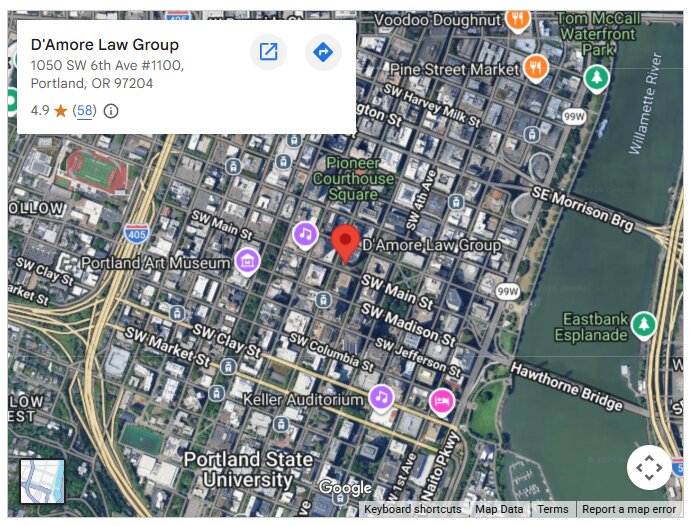
1050 SW 6th Ave #1100, Portland, OR 97204
(503) 222-6333
[email protected]
https://damorelaw.com/
YouTube: www.youtube.com/@DAmoreLawGroup
LinkedIn: www.linkedin.com/company/d'amore-law-group/home/
Facebook: www.facebook.com/DAmoreLaw/
Disclaimer: This press release is provided for general informational purposes only and does not constitute legal advice. Reading this release or contacting D'Amore Law Group does not create an attorney-client relationship. Every case is unique, and outcomes depend on the specific facts and applicable law.
Source: 38 Digital Market News
Release ID: 2607478



